
Blog
- home
- >
- Blog
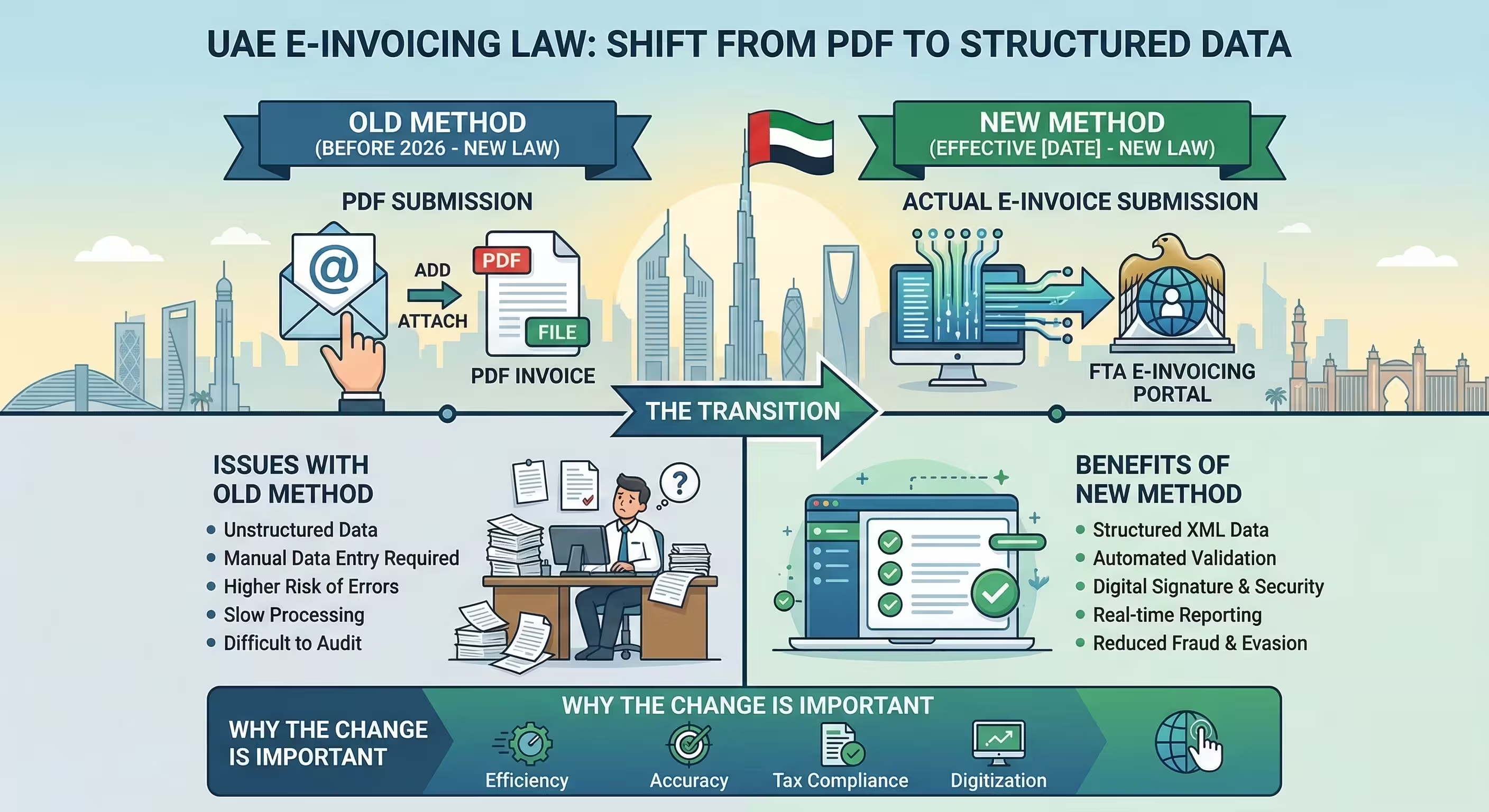
The Future of UAE Finance: Navigating the 2026 E-Invoicing Mandate
If you are running a business in the UAE, the way you bill your clients and process your accounts is about to change forever. The era of attaching a PDF to an email, mailing a physical piece of paper, or scanning a document to send to a buyer is rapidly coming to an end.
On February 23, 2026, the UAE Ministry of Finance (MoF) released the official Version 1.0 of the Electronic Invoicing Guidelines. This officially sets the stage for a nationwide digital transformation. Starting with a pilot phase in July 2026, the UAE is rolling out a mandatory Electronic Invoicing (e-invoicing) system.
At DP Taxation, our phones have been ringing off the hook with clients asking: "What exactly is this? When do I have to do it? And what is DP Taxation’s stance on all of it?" We have put together this comprehensive guide to answer all your questions, decode the trending industry jargon, and give you a clear roadmap for the future.
What Exactly is UAE E-Invoicing?
Let's clear up the biggest misconception right away: an e-invoice is not a digital picture of an invoice. A PDF, a Word document, or a JPEG sent via email does not qualify as an e-invoice under the new UAE laws.
Under the new mandate, an e-invoice is a highly structured, machine-readable data file (specifically formatted in XML or JSON). This digital file contains specific, mandatory data fields that are instantly readable by accounting software, your buyer’s systems, and the Federal Tax Authority (FTA).
Decoding the Buzzwords: The Tech Behind the Tax
As you start researching this transition, you are going to see a lot of technical "meta vocab" thrown around. Here is what those trending terms actually mean in plain English:
1. Peppol Network & PINT-AE The UAE isn't building a system from scratch; they are adapting a globally recognized, highly secure framework called Peppol (Pan-European Public Procurement OnLine). Think of Peppol as a universal digital language and secure delivery network for business documents. To make this work for local tax laws, the UAE has created its own specific data dictionary called PINT-AE. This means your invoices will have to be formatted specifically to the PINT-AE standard to be legally valid.
2. The DCTCE / 5-Corner Model
The UAE is adopting a Decentralized Continuous Transaction Control and Exchange (DCTCE) framework. This is commonly referred to as the 5-Corner Model. Here is how it works:
Corner 1 (You): You generate the invoice data in your accounting system.
Corner 2 (Your ASP): Your data goes to your Accredited Service Provider (more on them below), who validates the data and translates it into the PINT-AE XML format.
Corner 3 (Buyer's ASP): Your provider securely sends the invoice to your buyer’s Accredited Service Provider.
Corner 4 (The Buyer): The buyer receives the validated invoice directly into their accounting system.
Corner 5 (The FTA): At the exact same time, your ASP securely transmits the necessary tax data directly to the Federal Tax Authority.
3. Accredited Service Providers (ASPs) You cannot send an e-invoice directly to the FTA or your buyer. You must use an Accredited Service Provider (ASP). These are certified, highly secure third-party tech companies vetted by the government. They act as the digital bridge between your business, your clients, and the tax authority.
The Official 2026–2027 Implementation Timeline
The mandate applies to almost all Business-to-Business (B2B) and Business-to-Government (B2G) transactions, regardless of whether you are VAT-registered or not. The rollout is happening in strict phases based on your company's annual revenue:
The Pilot Phase (July 1, 2026): A voluntary testing phase begins. Anyone can opt-in to test their systems, and a select "Taxpayer Working Group" will test the infrastructure live.
Phase 1 - Large Businesses (Revenue ≥ AED 50 Million): * Deadline to Appoint your ASP: July 31, 2026
Mandatory Go-Live Date: January 1, 2027
Phase 2 - SMEs (Revenue < AED 50 Million):
Deadline to Appoint your ASP: March 31, 2027
Mandatory Go-Live Date: July 1, 2027
Phase 3 - Government Entities (B2G):
Deadline to Appoint your ASP: March 31, 2027
Mandatory Go-Live Date: October 1, 2027
Note: The latest February 2026 guidelines also introduced a helpful 24-month grace period for intra-VAT group transactions, meaning intercompany billing within a tax group won't strictly require e-invoicing until January 2029.
DP Taxation’s Official Stance: Don't Wait, Innovate
Our stance at DP Taxation is simple: Do not view e-invoicing as just another regulatory burden; view it as a strategic upgrade for your business.
We strongly advocate for early preparation. The businesses that wait until the last minute are going to face massive bottlenecks. IT providers will be booked out, ASPs will be overwhelmed with onboarding requests, and rushed integration often leads to rejected invoices and delayed payments.
By getting ahead of the July 2026 pilot phase, you can automate your accounts receivable, drastically reduce manual data entry errors, speed up your payment cycles, and ensure you never face an FTA non-compliance penalty. We believe in turning compliance into a competitive advantage.
Your Action Plan: How to Prepare Today
You cannot fix your roof when it is already raining. Here is what DP Taxation recommends you start doing right now:
Conduct a Gap Analysis: Look at your current accounting software (Xero, QuickBooks, Zoho, custom ERPs). Can it export structured data? If you are still doing invoices in Microsoft Word, you need to upgrade your core systems immediately.
Clean Your Master Data: The PINT-AE format requires over 50 mandatory fields. If your customer database is missing TRNs (Tax Registration Numbers), proper addresses, or uses incorrect product codes, your invoices will be automatically rejected by the system. Clean your data now.
Shortlist Accredited Service Providers (ASPs): Start looking at the MoF’s approved list of providers. You need to find an ASP that integrates smoothly with your specific accounting software.
Talk to DP Taxation: Navigating the technical and tax requirements of the DCTCE model is incredibly complex. Our team is here to help you map your current workflows, ensure your data is clean, and guide you through the ASP selection process so you are 100% ready before the deadlines hit.
The 2026 e-invoicing mandate is a massive leap forward for the UAE's digital economy. The timeline is set, the technology is defined, and the countdown has begun.
Reach out to DP Taxation today, and let's get your business integrated, compliant, and ready for the future.
- Dhana Pillai