Blog
- home
- >
- Blog
The End of Paper: Navigating the UAE's New 2026 E-Invoicing Mandate
Running a business in the UAE just got a massive technological upgrade. For years, companies have been entirely comfortable operating with basic accounting systems, sending simple PDF invoices via email, and keeping physical paper trails.
However, the UAE government is officially changing the game. In a major move to digitize tax administration and clamp down on fraud, the government is rolling out the nationwide Electronic Invoicing System (EIS). This isn't just a minor tweak to how you file your taxes; it is a fundamental shift in how every single business-to-business transaction is recorded, verified, and stored.
At DP Taxation Consultancy, our mission is to cut through the noise. We know that business owners don't have the time to read through hundreds of pages of dry, dense legal text. You need to know exactly what is changing, how it affects your bottom line, and what you need to do about it right now.
Let’s skip the confusing IT and legal jargon. Here is your clear, straightforward guide to the massive UAE regulatory updates of 2026.
How the New System Actually Works
The UAE is adopting what is known globally as a Continuous Transaction Control (CTC) model, heavily based on the international Peppol framework.
In plain English, this means you can no longer just send an invoice directly to a client and call it a day. You have to use a designated middleman.
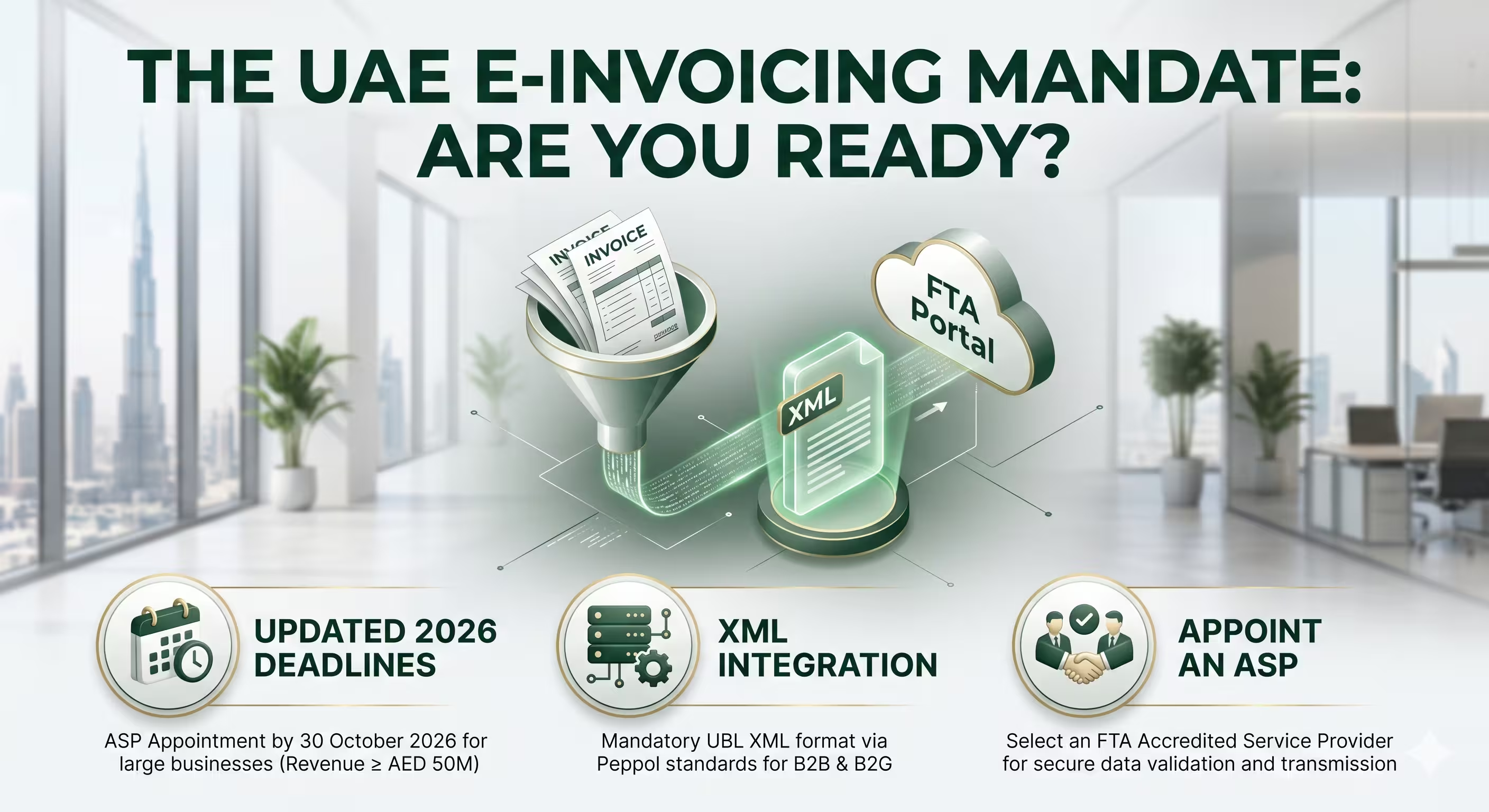
All taxpayers subject to this new rule are legally required to appoint an Accredited Service Provider (ASP). The ASP is a specialized, government-approved tech firm that acts as a secure bridge. When you create an invoice in your accounting software, it goes to your ASP first. The ASP validates that it matches the exact XML structure required by the Ministry of Finance, applies a digital signature, and then securely transmits it to both your client and the Federal Tax Authority (FTA) simultaneously.
The Brand New Implementation Timelines (Updated May 2026)
The government knows that overhauling your entire billing infrastructure takes time, so they are rolling this out in phases based on your company's revenue.
Just recently, on May 10, 2026, the Ministry of Finance provided an incredibly important update that shifts the timeline slightly for larger corporations. Here is the definitive schedule:
The Pilot Phase (July 1, 2026): A select working group of businesses will begin testing the system live under the supervision of the Ministry and the FTA. Starting on this date, any business in the UAE can also choose to adopt the system voluntarily.
Large Businesses (Revenue of AED 50 million or more): Under the new MoF update, large businesses have been granted an extension to officially appoint their ASP; the deadline moved from July 31, 2026, to October 30, 2026. However, the mandatory "go-live" date remains firm: you must be fully utilizing the system by January 1, 2027.
Small and Medium Enterprises (Revenue under AED 50 million): If your revenue sits below the AED 50 million mark, you have a bit more time to prepare. You must officially appoint your ASP by March 31, 2027. Your system must be fully active and live by July 1, 2027.
Government Entities: Government bodies have the same timeline as SMEs. They must appoint an ASP by March 31, 2027, and go live by October 1, 2027.
Your 3-Step Action Plan
You cannot wait until the week before your deadline to figure this out. Upgrading your IT infrastructure takes months of planning. Here is what you need to do right now:
1. Audit Your ERP System You need to sit down with your IT department or software vendor immediately. Your ERP or accounting software must be upgraded so it can automatically generate structured invoices in XML, map all the required fields to the Ministry's data dictionary, and link directly to an ASP. If you are using basic, outdated software, you will likely need to migrate to a new platform entirely.
2. Select and Appoint an ASP You cannot connect to the government's portal on your own. You must vet and select an official, FTA-accredited ASP before your phase's deadline. You will need to complete the onboarding process with your chosen provider directly through the EmaraTax platform on the FTA website.
3. Review Your B2C Operations It is worth noting that certain categories of transactions are entirely excluded from this mandate under the new regulations. Most notably, Business-to-Consumer (B2C) transactions do not require these complex XML e-invoices. If your business handles a mix of B2B and B2C sales, your accounting team needs to clearly segment these revenue streams so you are only routing the correct invoices through your ASP.
Don't Do It Alone
Transitioning to the UAE's new digital invoicing framework is going to be one of the biggest administrative hurdles companies face over the next two years.
If you are unsure whether your current accounting software will make the cut, or if you need help understanding exactly which phase your business falls into, the team at DP Taxation Consultancy can help you audit your current billing processes, connect you with the right compliance strategies, and ensure your business is fully prepared well before the deadlines hit.
- Dhana Pillai